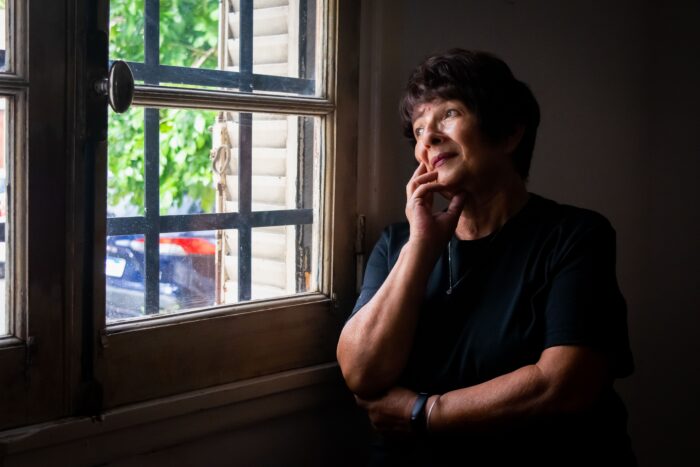
Ask someone who has never visited a senior living community to describe what they picture, and the answers tend to follow a familiar pattern. Long hallways. Not much happening. A television in a common area that nobody is really watching. It’s boring.
It’s an image that persists, even as the reality of senior living has changed considerably. And it’s one that keeps some people from exploring options that might genuinely suit them.
Where the Boring Image Comes From
The quiet, passive version of senior living was probably accurate in some places, at some point. Older models of elder care didn’t prioritize engagement or community the way modern Life Plan Communities do. What the field has learned since then is significant.
A 2024 review published in HERD: Health Environments Research & Design Journal found that engagement, defined as willful, motivated involvement in meaningful activity, is a core component of health and well-being in older adults, and that physical environments play a direct role in whether that engagement happens or doesn’t. The review found engagement linked to reduced disease risk, better mental health, and improved physical and cognitive function. Social isolation and a boring setting, by contrast, are associated with a significantly increased risk of early death, cognitive decline, heart disease, and depression, according to a consensus report from the National Academies of Sciences, Engineering, and Medicine.
What a Day Full of Opportunity Actually Looks Like
At communities like Sierra Winds, the rhythm of daily life tends to catch new residents off guard. Fitness classes run in the morning. Card games, billiards, choir, painting, and book groups fill the afternoon. And alongside the scheduled calendar, there are the unplanned moments like a neighbor stopping by, a spontaneous invitation to join something, the kind of small social contact that’s easy to underestimate but turns out to matter quite a bit.
And it’s anything but boring. One of the most common things new residents say in their first weeks is some version of: “I don’t know how I ever had time for anything else.” It tends to come as a genuine surprise.
Why Engagement Doesn’t Happen by Accident
The level of engagement that characterizes thriving senior living communities doesn’t just emerge on its own. It’s the intentional design with environments that make participation easy, programming that reflects what residents actually want, and a culture that treats involvement as the norm rather than an option.
When someone no longer has a house to maintain or a yard to manage, time opens up. When neighbors are steps away instead of a car ride, connection becomes easier. When a full calendar of programming and freedom from boring routines is simply part of where someone lives, the friction that used to keep people home disappears. The HERD review confirms that design factors such as proximity, accessibility and comfortable shared spaces meaningfully influence whether older adults stay socially and physically active.
What Rediscovery Looks Like
People who move into senior living communities often find their way back to things they’d set aside for decades. Someone who hadn’t painted in years finds a regular spot in the art room. A couple who joined a walking group on a doctor’s recommendation end up organizing it. Someone who came in cautiously soon discovers that there are people who want their company and activities that call for their participation.
That sense of being requested somewhere, of mattering to a community, has documented health effects. The Mather Institute’s Age Well Study, the only national five-year longitudinal study of its kind, found that Life Plan Community residents showed better health outcomes, higher levels of physical activity, and greater social wellness compared to demographically similar adults living independently. Over five years, intellectual activity engagement increased among Life Plan Community residents while it declined among the comparison group.
What to Look for During a Visit
When exploring a senior living community, the most useful thing to observe isn’t the physical space; it’s how the physical space is being used. Are activity rooms occupied? Is the dining room lively? Are people moving through the building with somewhere to go? Does it look boring?
A visit at midday tends to reveal more than a weekend morning tour. Joining a meal and spending time with current residents offers a clearer sense of what the community actually feels like to live in.
The “boring” picture of senior living that lives in most people’s imagination is worth questioning. What’s often found in its place is a community that’s full, active, and — in the words of many who’ve made the move — more than they expected. Sierra Winds is a Life Plan Community in Peoria, Arizona, offering a vibrant, active lifestyle alongside a full continuum of care. To schedule an anything-but-boring tour or learn more, contact the Sierra Winds team today.